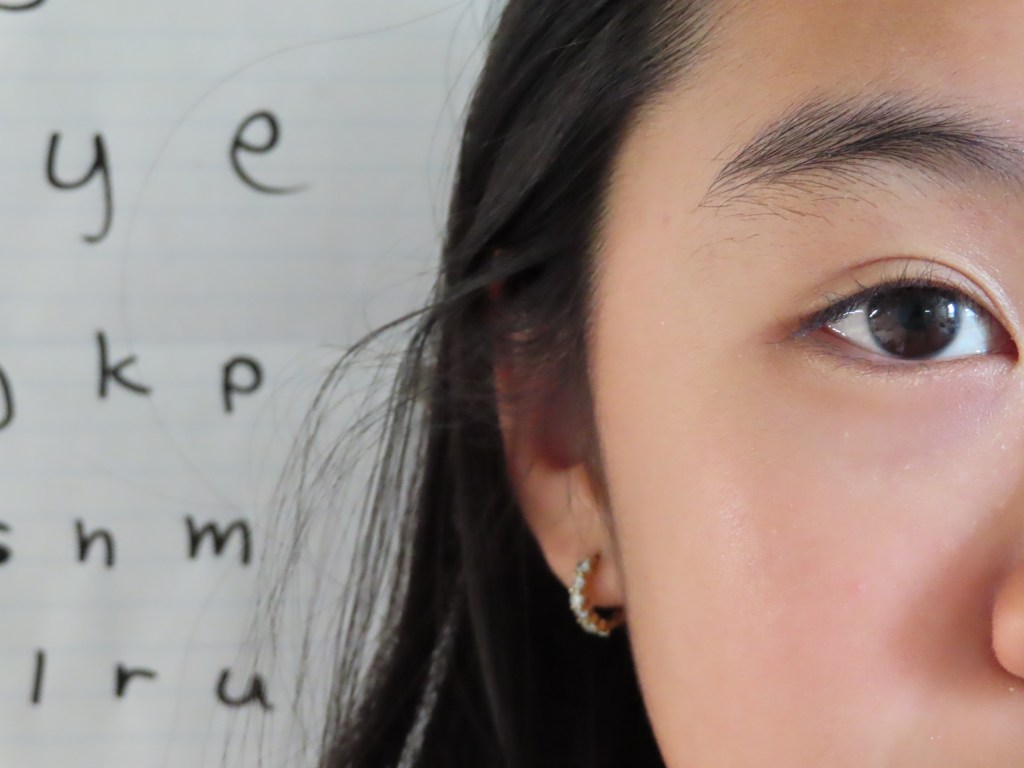
Childhood glaucoma is a retinal disease affecting the pressure flow of fluid in the eye. Resulting effects may include sensitivity to light, cloudy corneas, discomfort, and more. (Photo by Katie Park)
As a developing child, the eyes are no exception when facing growth and change. While a child’s eyes can grow in a positive direction, some are susceptible to developing retinal diseases such as glaucoma. Glaucoma is a condition in which the fluid aqueous humor ceases its normal flow and cannot drain out of the eye adequately. This creates severe pressure damage to the optic nerve which can result in vision impairment (1).
Glaucoma can be classified into primary, secondary, and acquired subtypes. Primary glaucoma can be further divided into primary congenital glaucoma, present from birth to early childhood, and juvenile primary open-angle glaucoma, developing from around age four to early adulthood. Secondary glaucoma includes syndromic disorders or other medical conditions present at birth such as Axenfeld-Rieger syndrome, Rubinstein-Taybi syndrome, and various others. Finally, acquired glaucoma is developed by external factors such as inflammation, drugs, surgery, and trauma (2).
An eye examination test can accurately diagnose glaucoma through the means of a visual acuity test, a common eye test chart; pupil dilation, widening the pupil with eye drops and examining the retinal and optic nerve; visual field, an examination of a child’s peripheral vision; and a tonometry test, a standard test designed to determine fluid pressures of the eye (1).
Due to the rarity of glaucoma in children, symptoms may not be as evident as those present in adults. Despite this, symptoms may include excessive tearing, sensitivity to light, cloudy or enlarged corneas, one eye appearing larger than the other, and pain and discomfort (3).
Treatments for the disease may include various forms of medication or surgery. Doctors may prescribe topical eye drops such as beta-blockers, carbonic anhydrase inhibitors, prostaglandin analogs, or other medications targeted to produce less fluid or reduce fluid pressure (4). In some cases, surgery may have the greatest impact, utilizing microsurgery to create an opening to drain fluid.
Goniotomy and trabeculotomy are two effective and safe procedures for treating children with glaucoma (5). A Goniotomy is an incision made from within the eye for children under two with congenital glaucoma, also known as trabeculodysgenesis, while a trabeculotomy is an incision made from outside the eye for children over three. While both procedures are safe and effective in correcting childhood glaucoma, a trabeculotomy may be more technically difficult in achieving a perfect procedure. On the other hand, a trabeculectomy can be more beneficial in situations where the cornea cannot be seen during a craniotomy due to its cloudiness (6). After the operation, side effects may include swelling and soreness of the eye as well as slight bleeding and blurry vision (7).
Although glaucoma is typically observed in adults, children also have the possibility of developing the retinal disease. Without treatment, children may experience visual impairment and loss of optical ability. Immediate medical attention should be sought to prevent worsened conditions and to mitigate and enhance the health of the child.
References
(1) Philadelphia, T. C. H. of. (n.d.). Childhood glaucoma. Children’s Hospital of Philadelphia. https://www.chop.edu/conditions-diseases/childhood-glaucoma
(2) Incidence and clinical characteristics of childhood glaucoma: A population-based study | congenital defects | jama ophthalmology | jama network. (n.d.-a). https://jamanetwork.com/journals/jamaophthalmology/fullarticle/425373
(3) Glaucoma in children. in Children | Boston Children’s Hospital. (n.d.). https://www.childrenshospital.org/conditions/glaucoma
(4) I;, C. G. I. T. (n.d.-a). The safety and efficacy of glaucoma medication in the pediatric population. Journal of pediatric ophthalmology and strabismus. https://pubmed.ncbi.nlm.nih.gov/19213271/#:~:text=Medical%20therapy%20of%20pediatric%20glaucoma,first%20choice%20in%20pediatric%20glaucoma
(5) J;, H. H. R. (n.d.). Goniotomy vs trabeculotomy. Journal of pediatric ophthalmology and strabismus. https://pubmed.ncbi.nlm.nih.gov/6470912/
(6) DR;, A. (n.d.). Trabeculotomy compared to goniotomy for glaucoma in children. Ophthalmology. https://pubmed.ncbi.nlm.nih.gov/6622020/
(7) DR;, A. (n.d.). Trabeculotomy compared to goniotomy for glaucoma in children. Ophthalmology. https://pubmed.ncbi.nlm.nih.gov/6622020/



 Park Medical Research
Leave a comment